The EDF Climate Corps is a prestigious summer internship program for students in the field of low-carbon and sustainable development. Each year, EDF selects approximately 40 outstanding master’s and doctoral students from leading universities in China and recommends them to well-known enterprises or institutions for a 10-week internship focused on low-carbon and sustainable development initiatives. The program aims to cultivate young talent for the future of sustainable development, while leveraging students’ expertise to help enterprises address practical challenges in energy conservation and emissions reduction.
Li Qiaoyi, postgraduate student of ICARE Class of 2024, Research Group of Professor Liu Xiuliang — Focus on Two-Phase Refrigeration Energy Efficiency Improvement
During the EDF Climate Corps program, I had the great opportunity to complete a 10-week sustainable development internship at Danone Beverages China (DBC), a subsidiary of the French company Danone.
Danone is a world-leading food and beverage enterprise headquartered in France, dedicated to bringing health to as many people as possible through food. It focuses on three core business areas: early life nutrition, water and beverages, and essential dairy and plant-based products, with operations in more than 120 countries and regions. Danone Beverages China (DBC) is one of the company’s key business units in China, home to the well-known “Mizone” beverage brand. In recent years, DBC has actively advanced its sustainable development goals, working toward achieving “net-zero carbon emissions” and supporting China’s “dual-carbon” strategy.
“At Danone, a company with years of experience in sustainable development, I learned what a sustainable business model looks like from the corporate perspective. I developed the ability to link sustainability projects (which do not generate immediate financial returns) to long-term corporate value, and to demonstrate a company’s sustainable production capacity to investors. I also gained insights into designing reasonable investment models to reduce project costs and improve return on investment.”
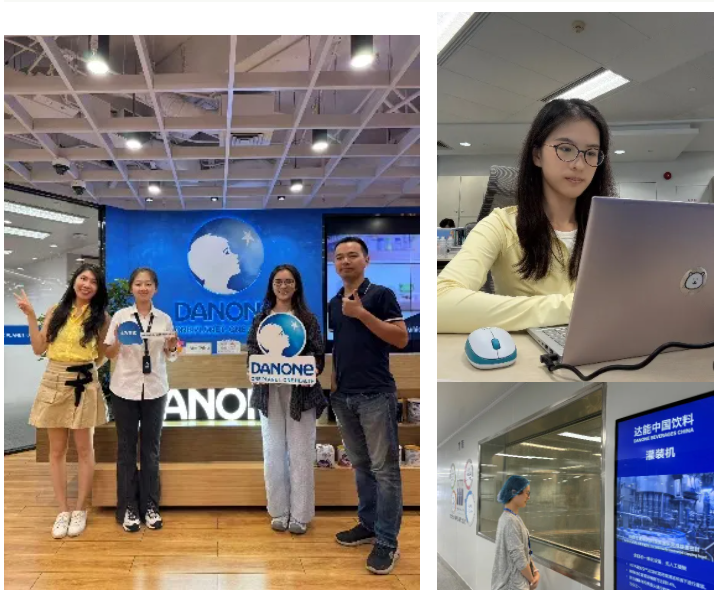
Through practical experience, I deepened my understanding of the ESG industry and learned the respective roles and responsibilities of Party A and Party B enterprises. From a personal career development perspective, I learned from my outstanding mentor that practitioners in the field of sustainable development must possess the ability to collaborate with various departments and coordinate different interests to reach consensus.
Throughout the program, I witnessed the “business for good” philosophy upheld by EDF, Danone, and my mentor. This aligned perfectly with the focus of my internship—both centered on creating positive impact. Enterprises seek to reduce carbon emissions in the industry and environment through influence; EDF aims to involve more people in sustainability efforts through influence; and during the project, I embraced this concept and aspire to continue passing it on in my future career.
Yang Ruixin, postgraduate student of ICARE Class of 2024, Research Group of Professor Long Yan — Focus on Low-Carbon Optimization of Integrated Energy Systems
This summer, I had the privilege of joining the EDF Climate Corps program and completing a 10-week sustainable development internship at TMS (a subsidiary of Morgan Street Holdings).
TMS is a global innovative enterprise integrating technology, marketing, and supply chain management, headquartered in Chicago, USA, with branches in London, Shanghai, Hong Kong, and other locations. The group has long served global brands such as McDonald’s, Starbucks, and Coca-Cola, providing integrated solutions covering creative design, digital marketing, and sustainable supply chain management. Its business not only focuses on enhancing brand experiences but also emphasizes corporate social responsibility and environmental sustainability.
During the internship, I mainly participated in the low-carbon transition project of Chaozhou Qingfa Ceramic Co., Ltd., helping to formulate the company’s carbon reduction roadmap and energy efficiency improvement plan. My tasks included conducting carbon inventory assessments and analyzing carbon reduction potential, defining SBTi target pathways based on actual production conditions, designing photovoltaic-plus-storage system plans, assessing the feasibility of switching fuel from LPG to natural gas, and proposing energy-saving optimization measures for kiln waste heat recovery, lighting, and motor systems. I also participated in designing the company’s energy metering system and the supplier selection model for the energy management system (EMS), establishing a long-term foundation for Qingfa Ceramic’s energy and carbon management.
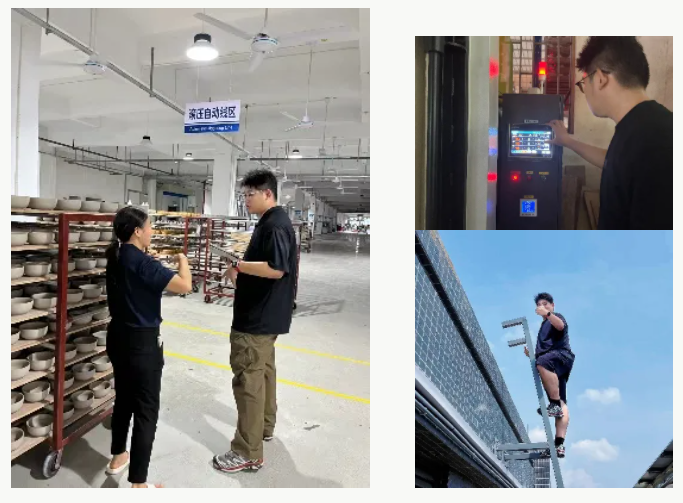
First, mastering communication. During the internship, I communicated daily with various stakeholders, including management, production supervisors, and frontline workers. Initially, many were skeptical of me as a “bookish” young student. However, through data analysis and modeling, I identified potential risks in energy equipment, quantified energy-saving benefits, and assisted in resolving energy contract issues—gradually earning trust through professional capability. Later, during the EMS bidding process, I negotiated with three suppliers on behalf of the company. They mistakenly assumed I was a senior industry practitioner and were surprised to learn that I was still a graduate student. In that moment, I realized I had grown from a guided learner into an independent contributor.
Second, gaining insight into the multi-dimensional nature of ESG, broadening my horizons, and strengthening my career aspirations. During the internship, I observed how global enterprises embed ESG into their strategies and culture, and how manufacturing companies implement practical measures in energy optimization, carbon management, and employee engagement. This cross-enterprise and cross-cultural experience taught me that ESG is not only a corporate responsibility but also a systematic mindset that drives the combined growth of business and social value. Meanwhile, I reexamined the significance of scientific research—only when scientific knowledge is integrated into industrial practice and translated into real carbon reduction solutions can it truly create change. This experience solidified my determination to contribute to the climate industry, using scientific research to address industrial decarbonization challenges and testing theoretical insights through real-world application.